
Archiving an Artist’s Book Publication Materials
Artist and Author Archives
Archives preserve primary source material such as manuscripts, correspondence, sketches, and papers of significant creative people. They are used for housing cultural materials for research. The University of Washington Special Collections Archive is one such place, and they requested this artist’s papers.
The Artist-client had maintained relationships with the University of Washington, his alma mater, and the publisher of several of his books. He is a prominent Northwest artist, environmental and community figure. In talking with the archivist at Special Collections, she recommended we focus on papers, flatwork, and any digital files.
The Cataloging Process
The artist-client stored the artwork in boxes, roughly grouped by book association, in both his studio and house. Book papers lived in file cabinets, also in both locations. First order was to consolidate the materials in one place.
1. We tackled the cataloguing task one book at a time, starting with the largest group of illustrations. Each flatwork got its own protective sleeve and label. Some preliminary labeling was done in years prior but there were many pieces I had to hold up to the artist to identify. We worked together sorting the artwork, and cross-referencing page numbers and titles of each piece by using his books.
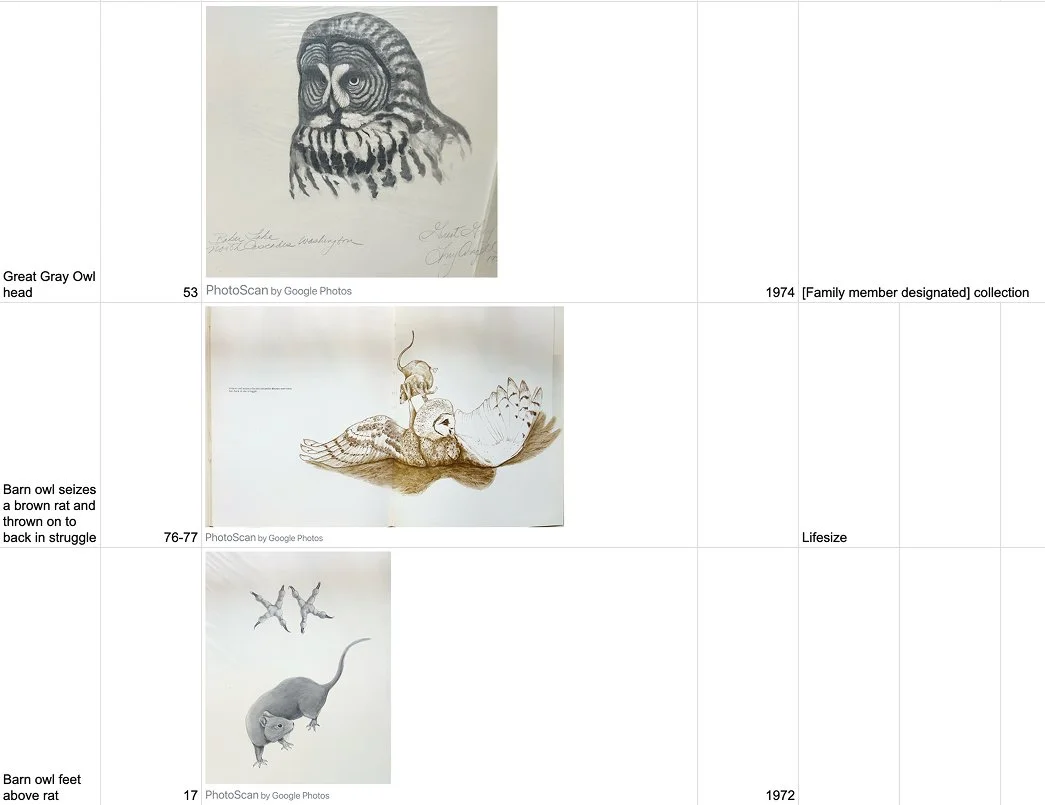
2. To create a sharable digital catalogue, I photographed, relabeled, and catalogued each work into book-specific spreadsheets. A low-resolution scan of each work was adequate for our purposes. The family used the spreadsheet to share among the heirs so they could indicate their preferences, and those specific pieces were not included in the final donation to the University.
Detail of flat art files catalogued in a sharable spreadsheet
What We Included: Book and Illustrations Delivery
Notes and development materials from each published book (yes, there are unpublished manuscripts we did not donate in this batch)
Illustrations in the artist’s possession, each identified, labeled, photographed, and catalogued
Shareable digital spreadsheet of catalogued illustrations for institution and family records
Marketing materials and book reviews for each book
Book royalty receipts
Oral history recordings for each book, highlighting any backstories or anecdotal information not otherwise available in the paper records
Delivery of the Materials
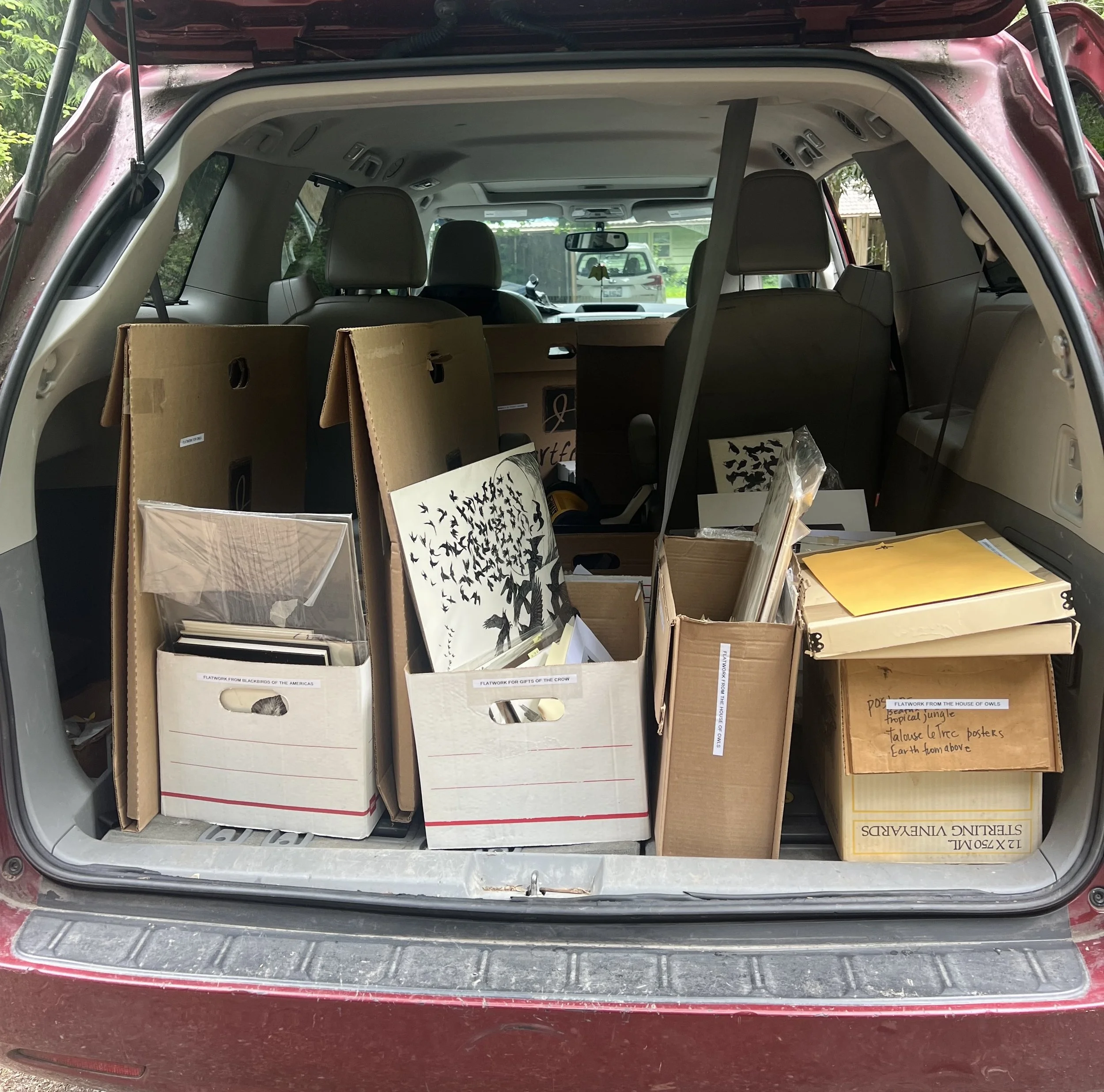
After 4 months of 10-15 hours a week of work, the artist was ready to deliver a batch of boxes to the University. I loaded 17 boxes into my van and drove them to the archive.
Now these materials are available for perusal at the UW.
A trunkload of boxes, art, and book material ready for transport to the University of Washington.
Ready to start your own archiving project? Schedule a free consultation with me.