
Archiving an Artist’s Papers
NOTE: This is the second entry on archiving creative materials. Please be sure to read the first and third entries in this series.
Archiving Paperwork and Correspondence
Determining future homes for papers is one of the steps of collections assessment. There are many sorts of destinations for papers and cultural objects: University Libraries, historical societies and museums, and other specialty organizations and institutions. This client is very lucky, and we had a clear destination for his archives. He’d maintained relationships with the University of Washington, his alma mater. The UW wanted his papers for their Special Collections.
Deciding What to Keep and What to Toss
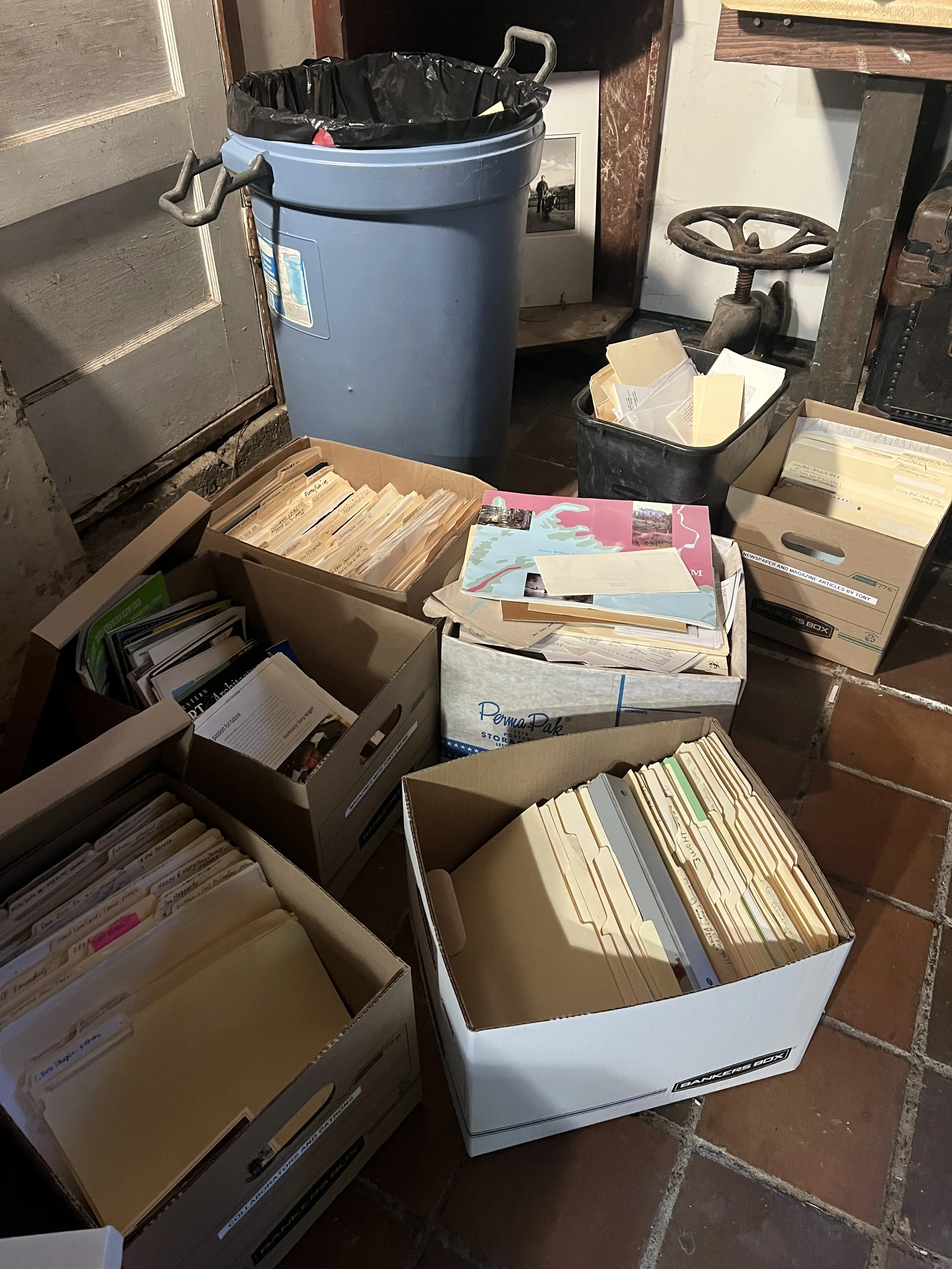
We handled and evaluated each piece of material for its resonance with the artist’s development and career. It involved the heartbreaking decision to dispose of items that hadn’t weathered time well (foxing, disintegration, or pounds of printout research material no longer needed for finished books), and surplussing items that took up space but went unused (dozens of books, large furniture, a concrete chainsaw). We also retained personal family letters, photos, and estate-related papers.
Boxes of materials, sorting, discarding, and cataloging in process
What We Included in the Archival Papers Donation
Letters to and from friends, patrons, collaborators, other artists, writers, and creatives
Magazine and newspaper articles about the artist, and by the artist (he is an avid Letter to the Editor contributor to the Seattle Times!)
Photos of artwork and the artist working, or standing with his artwork
Marketing materials and correspondence with galleries, institutions, organizations, and museums
Records and sketches from proposals, commissions, and work, complete and incomplete
Influences–materials collected by the artist on other artists who influenced his work
Humanities and Environmental Service Awards, other volunteer history
A financial contribution to the archives, to help support their cultural historic mission—yes, the institution gets the items, but it still costs to store it and a financial gesture is always appreciated.
How Long Did This Take?
4 months at 10 hours/week, mostly working alone and categorizing items (letters by name, galleries by name, newspaper articles by decade, etc). In the case of this artist, he trusted me to sort papers appropriately, set aside duplicates, and consolidate categories for his final review.
UW Library Delivery
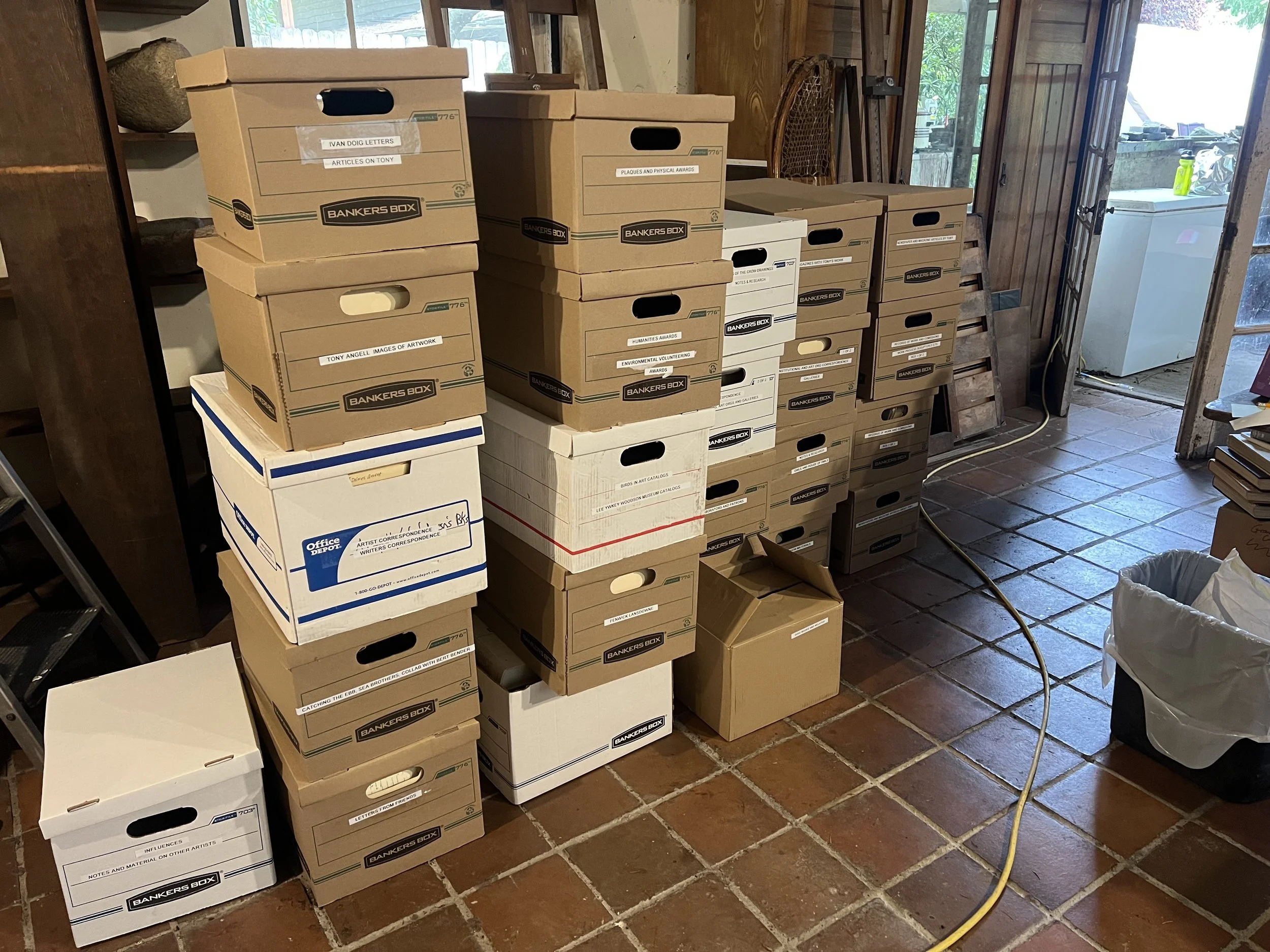
26 banker's boxes
Boxes ready to transport to the University of Washington.
Ready to start your own archiving project? Schedule a free consultation with me.